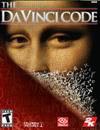
I'm going to go all English major on you for a second. Bear with or move along.
I've been reading
The Da Vinci Code mostly because it might help me win the Google Code Quest finals (which, thanks to the ginormous taxes that would come with ... I'm not even sure I want to win ... but ...). The last puzzle, for instance, would have taken me a fraction of the time if I had read the book. I bemoaned about this earlier, arguing the case that it belittled the contest in general somewhat. I hadn't even considered the fact that the answers to the puzzle appeared on the net a few minutes after that puzzle appeared. In other words, some of the people who finished before me may have done nothing more than google for it.
But I digress. In for penny and whatnot. I'll play the finals tomorrow and perhaps reading
The Da Vinci Code will help, or perhaps it won't. I'm here on a different matter.
The Da Vinci Code, in my opinion, is exemplary of a something wrong with American literature these days. It got some notice with Frey's
A Million Little Pieces, exposed by The Smoking Gun as
a work of fiction rather than an autobiographical account as Frey insisted. Dan Brown, on the other hand, opens his novel with this disclaimer:
Fact:
The Priory of Sion—a European secret society founded in 1099—is a real organization. In 1975 Paris’s Bibliothèque Nationale discovered parchments known as Les Dossiers Secrets, identifying numerous members of the Priory of Sion, including Sir Isaac Newton, Botticelli, Victor Hugo, and Leonardo da Vinci.
The Vatican prelature known as Opus Dei is a deeply devout Catholic sect that has been the topic of recent controversy due to reports of brainwashing, coercion, and a dangerous practice known as “corporal mortification.” Opus Dei has just completed construction of a $47 million World Headquarters at 243 Lexington Avenue in New York City.
All descriptions of artwork, architecture, documents, and secret rituals in this novel are accurate.
This disclaimer occurs before the prologue (which, to be honest, is simply
chapter zero). So before the reader is introduced into the story itself ... Dan Brown wants you to know:
this is based on the truth. He sets himself up as an authority for the reader and creates a foundation for which the reader should take the events, including the fictional ones, in his novel.
The problem is that either Dan Brown (or his publisher) is lying or was grossly negligent with his research. In fact, the Priory of Sion is not an organization founded in 1099 with members including Da Vinci and Victor Hugo ... but rather
an organization founded in 1956 as a hoax with the intention of supporting a known con man's claim to the throne of France. His description of
Opus Dei is misleading at it's best and slanderous at it's worse. His description of "artwork, architecture, documents and secret rituals" is likewise fraught with inaccuracies and mistakes.
My problem with this is that the book clearly has benefitted with this deceit. For one thing,
The Da Vinci Code is at best an average example of literature when it comes to form, dialogue and plot. It's a beach read. Like Frey's novel, without the premise of being based on real world facts ... it would be never have reached the level of popularity it's received today. It was Brown's insistence that he was basing his fiction on fact that raised the ire of so many to dispute his story.
It's a basic function of storytelling to illicit a suspension of disbelief from readers. To simply write a paragraph insisting that the entire foundation of your story is based on fact, when it's clearly not the case, cheats the reader and undermines the art form. It's a degradation of literature. It takes an artist to lead a reader down a path and weave enough detail and substance that they ignore the world around them and suppose, utterly on their own accord, that
maybe if this was real.
But anyone can put in a fraudalent claim of factual evidence. Insisting, after that, that "it's simply fiction and shouldn't be taken so seriously" is hardly a defense when even before the story begins ... the author has already defrauded the reader.
tagged: literature, da vinci code